Services
Seven services, described in terms of scope, method and what you receive
Each description below states the purpose of the service, the work it usually involves, how delivery is organised, and the kinds of artefacts that can result. No outcome is presented as guaranteed; scope and expectations are agreed in writing before work begins.
- 01Custom software development
- 02Web applications
- 03Cloud solutions
- 04Systems integration
- 05Workflow automation
- 06Data and analytics
- 07Software maintenance and technical support
Service 01
Custom software development
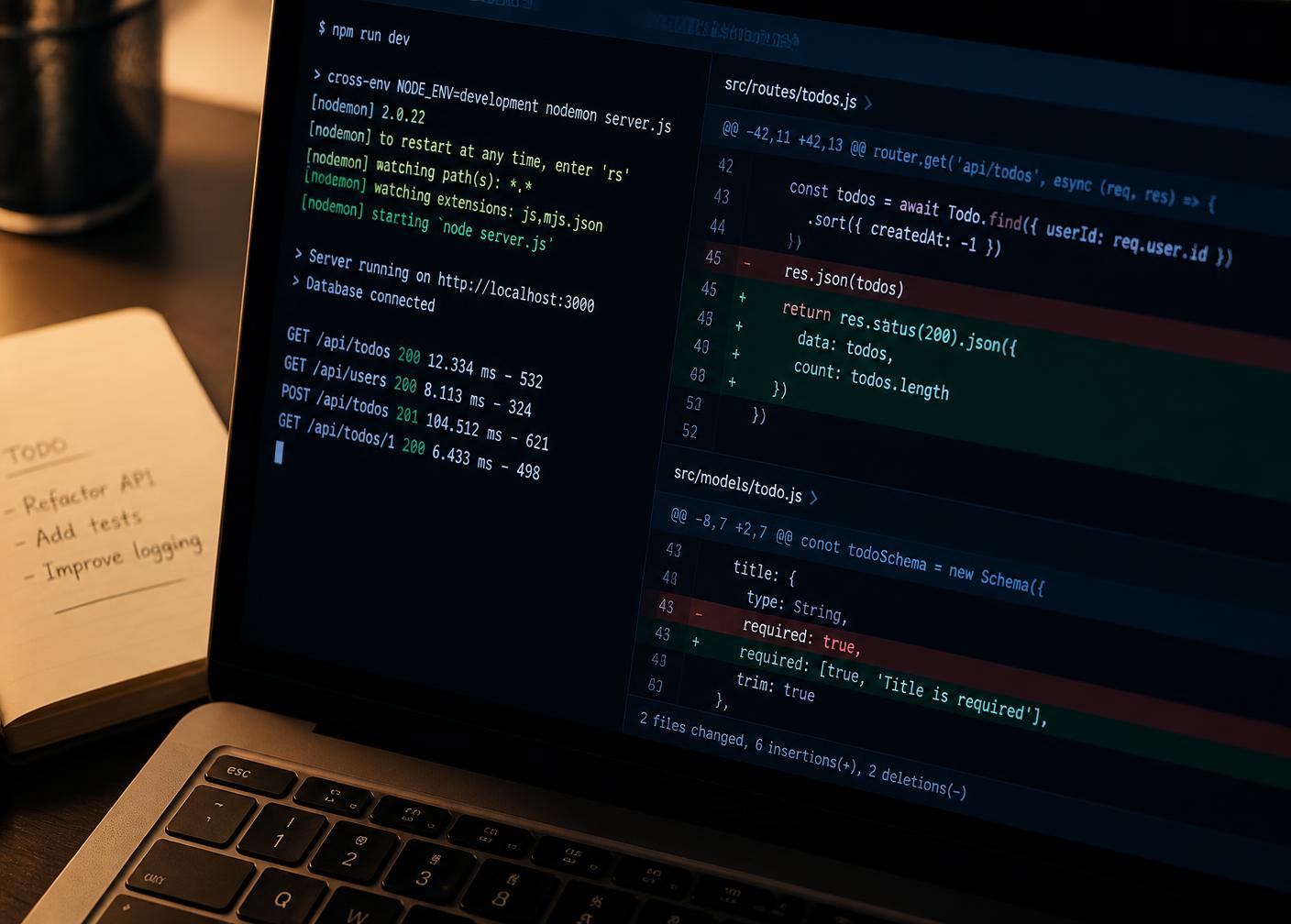
The purpose is to give a specific process the system it deserves: correct data, enforced rules, and screens that match the actual sequence of work. Custom development is worth considering when existing products require workarounds that people maintain by hand, or when a competitive advantage lives inside a process that generic software cannot express.
Typical scope
Domain and data modelling, business rules, user roles and permissions, core screens, reporting hooks, migration of existing records from spreadsheets or legacy databases.
Delivery approach
Discovery, then a thin end-to-end slice released early, then successive increments with review at the end of each. Automated tests accompany business logic from the first iteration.
Possible deliverables
- — Source repository with commit history
- — Automated test suite and pipeline configuration
- — Data model and rules documentation
- — Deployment and rollback runbook
- — Migration scripts for existing data

Service 02
Web applications
Web delivery suits systems that must be reachable without installation: customer portals, internal dashboards, booking and request flows, document workspaces, and content-driven sites where search visibility matters. The purpose is an interface that stays usable on an ordinary laptop or phone rather than only on a developer machine.
Typical scope
Information architecture, interface design system, server rendering or prerendering decisions, forms and validation, authentication, accessibility review, performance budget.
Delivery approach
Component-level build against a shared design system, continuous deployment to a staging URL, review sessions in the browser, and an accessibility and performance pass before each release.
Possible deliverables
- — Responsive application or site
- — Reusable component library and design tokens
- — Accessibility and performance review notes
- — Analytics and error reporting configuration
- — Content or administration guide
Service 03
Cloud solutions
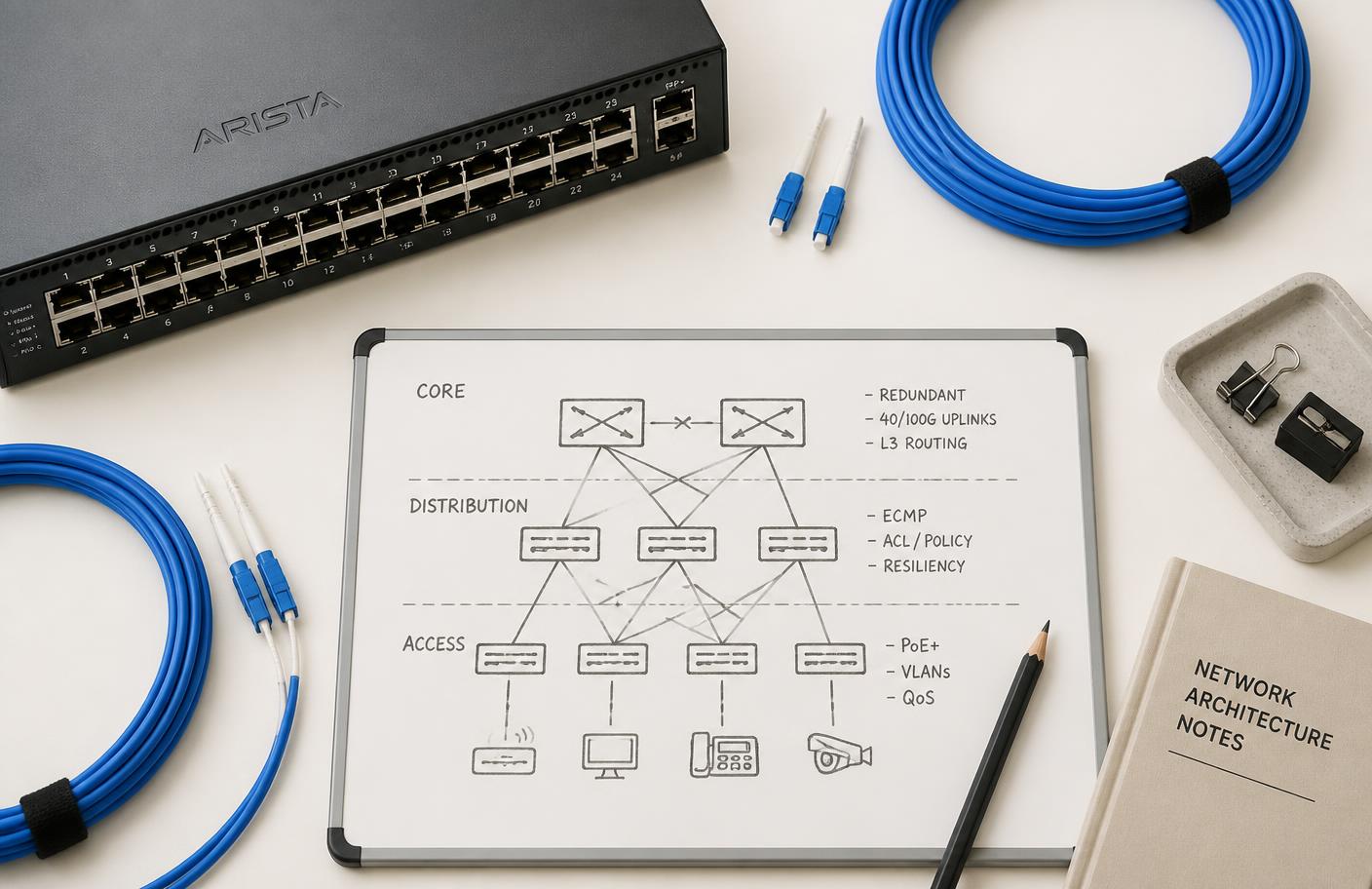
Cloud work exists to make environments reproducible and operable. Whether the target is a managed platform, containers or serverless functions, the purpose is the same: anyone with the right access should be able to rebuild the environment from the repository and understand what it costs.
Typical scope
Current-state inventory, target architecture, networking and access design, container or function packaging, managed database selection, backup and restore, monitoring and alerting, migration sequencing.
Delivery approach
Staging environment provisioned first and validated, then production cutover planned with a rollback path. Infrastructure changes reviewed like application code.
Possible deliverables
- — Infrastructure-as-code definitions
- — CI/CD pipeline with environment promotion
- — Monitoring dashboards and alert rules
- — Backup and restore procedure, tested
- — Cost breakdown by resource tag

Service 04
Systems integration
Integration exists to stop people copying data between systems. The purpose is a dependable flow of records — orders, invoices, employees, assets, tickets — with a clear answer to what happens when one side is unavailable or sends something unexpected.
Typical scope
Interface inventory, field-level mapping, authentication and credential handling, idempotency strategy, retry and dead-letter design, reconciliation reporting, sandbox testing against third-party APIs.
Delivery approach
One interface delivered end to end with monitoring before the next begins. Contract tests guard the mapping; a replay tool allows missed records to be reprocessed safely.
Possible deliverables
- — Integration services or scheduled jobs
- — Field mapping and contract documentation
- — Error queue with replay procedure
- — Reconciliation report
- — Alerting on backlog and failure rates
Service 05
Workflow automation
Automation targets the repetitive administrative work that sits between systems: re-keying forms, assembling recurring reports, chasing approvals, generating documents, filing attachments. The purpose is to remove the mechanical part while keeping people in charge of decisions.
Typical scope
Process documentation as actually performed, exception catalogue, rules and approval points, notification design, document generation, audit logging, handover of operating instructions.
Delivery approach
The process is first documented and agreed, then automated in stages, starting with the step that consumes the most time. Each stage runs alongside the manual process until it is trusted.
Possible deliverables
- — Automated jobs or event-driven handlers
- — Written process map including exceptions
- — Audit log and run history
- — Notification and escalation rules
- — Operating instructions for the responsible team

Service 06
Data and analytics
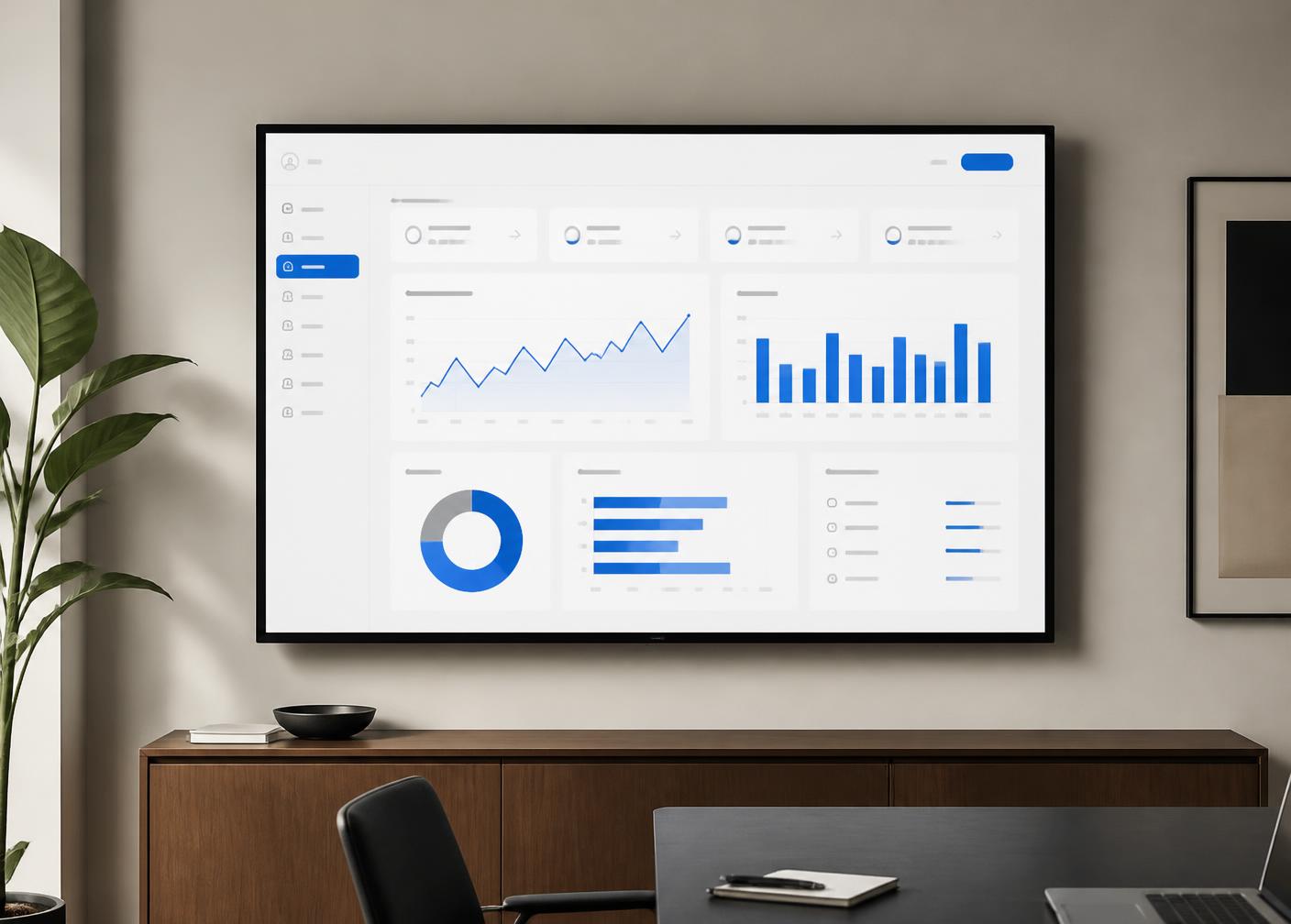
The purpose is a single, documented account of what happened. Work usually begins by resolving disagreements between existing reports, because a shared definition is worth more than another chart.
Typical scope
Source system review, measure definitions, extraction and transformation pipelines, warehouse or analytical schema, data quality tests, dashboards, scheduled exports, access control.
Delivery approach
Definitions agreed in writing first, then pipelines built with freshness and uniqueness tests, then presentation. Historical loads are re-runnable so corrections are straightforward.
Possible deliverables
- — Pipeline code and schedule
- — Documented analytical model and measure glossary
- — Data quality test suite
- — Dashboards and spreadsheet exports
- — Access and retention notes
Service 07
Software maintenance and technical support
Software decays without attention: dependencies age, certificates expire, data grows, and small changes accumulate. The purpose of a maintenance arrangement is to make that care routine and visible rather than reactive. Response arrangements are agreed explicitly; no availability level is claimed on this page.
Typical scope
Dependency and platform updates, security advisory review, monitoring and alert tuning, backup verification, performance review, small enhancements, defect investigation and fixes, documentation upkeep.
Delivery approach
A regular cadence — for example a monthly maintenance window — combined with an agreed channel and priority scheme for reported problems. Each change is deployed through the same pipeline as new development.
Possible deliverables
- — Maintenance log and update history
- — Reviewed monitoring and alert configuration
- — Verified backup and restore results
- — Defect reports with root cause notes
- — Updated runbooks and documentation
Starting a conversation
A written summary is the most efficient starting point: the outcome you need, the systems involved, any deadline, and who can answer technical questions. Enquiries are answered in writing.
[email protected]
myraclean.com